On August 10, 2008, we took the kids (so tiny then) to a Lipizzaner farm just outside of Chicago for a performance. It was so impressive to watch them perform and the horses were beautiful.
While we were unable to make it to a performance at the Spanish Riding School in Vienna we were able to schedule a tour of their facilities. I felt a little guilty about going without Maddie but clearly that didn’t stop me.
Emperor Maximillian II imported his horses from Spain in 1521 and in 1562 established the court stud. In 1562 the riding school was founded to train young men to be cavaliers. These horses were never used in battle due to their stature and high price tag but it still allowed men to learn how to ride and battle.
In 1580, the Emperor’s brother established a stud farm at Lipizza, which is now in Slovenia. This is where the breed gets its name. Because the borders of these countries have changed so much over time, the stud farm has been moved back to Austria.
The Spanish Riding School is located in the Hapsburg Palace and the horses are owned by the country of Austria.
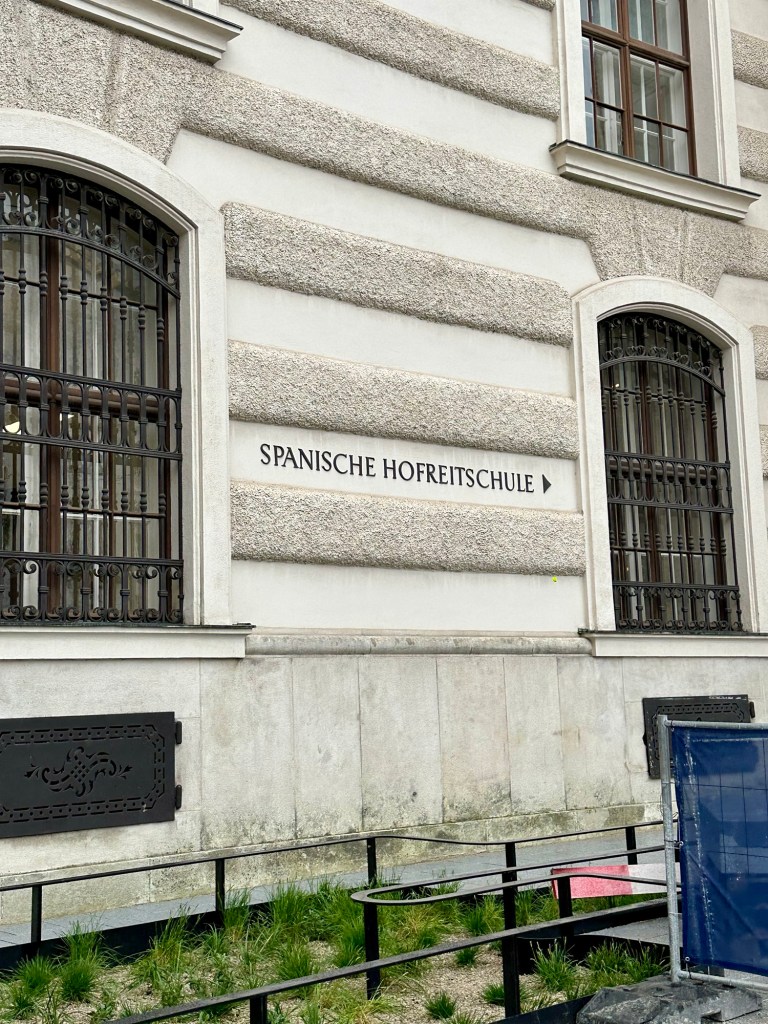
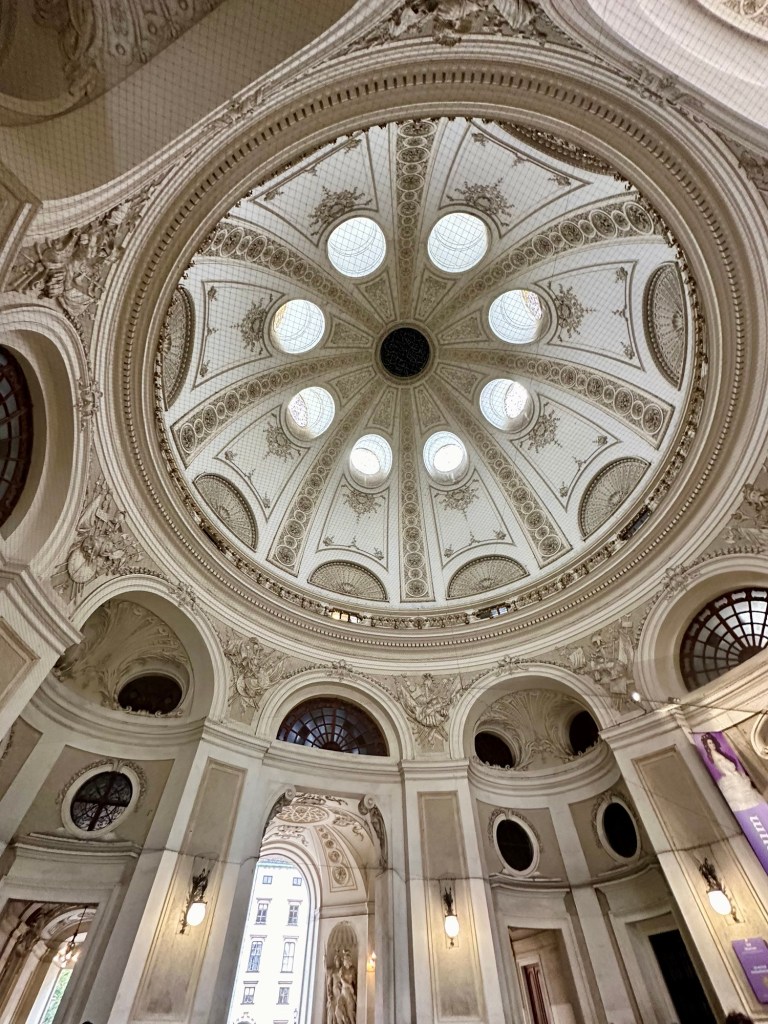
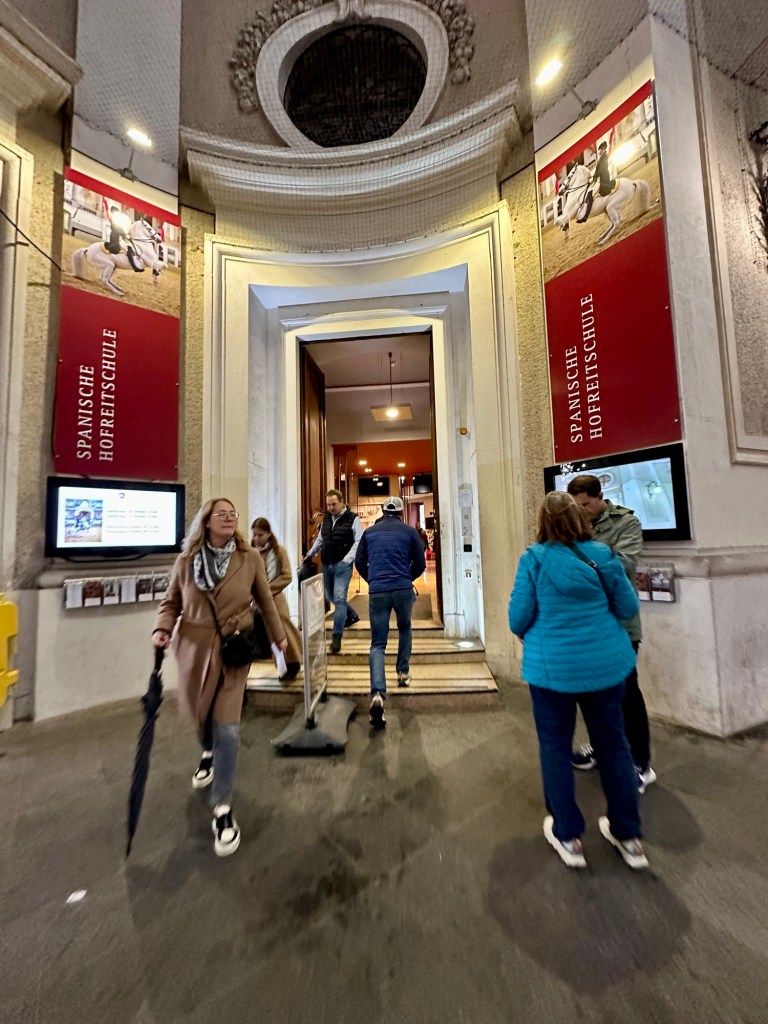
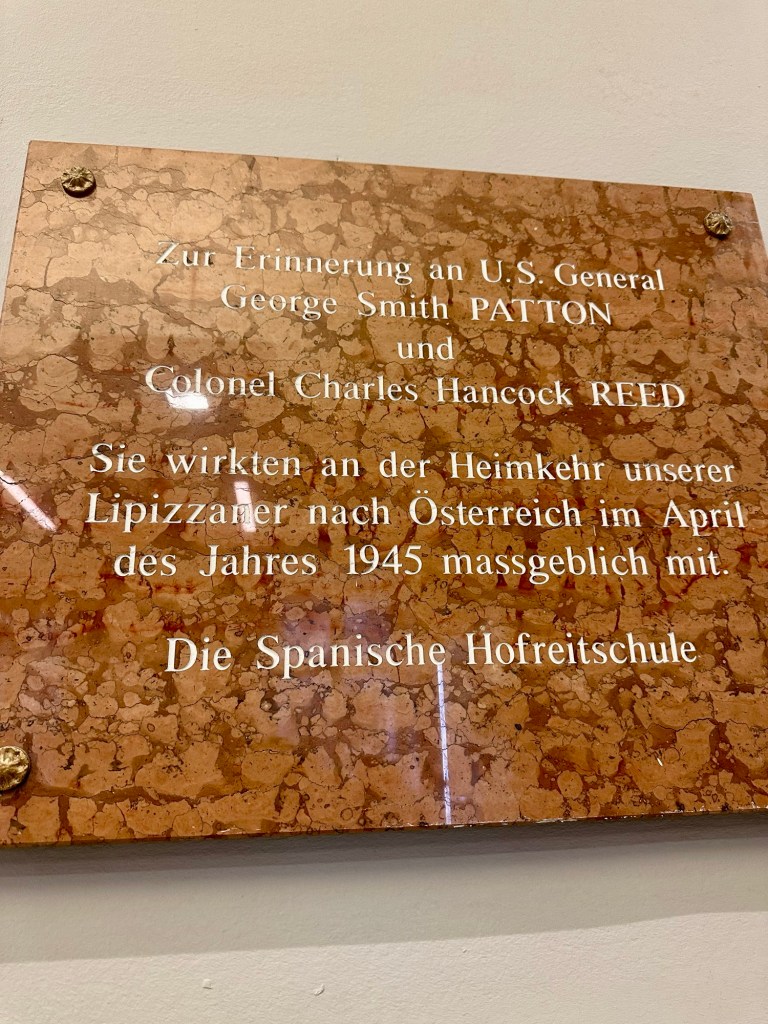
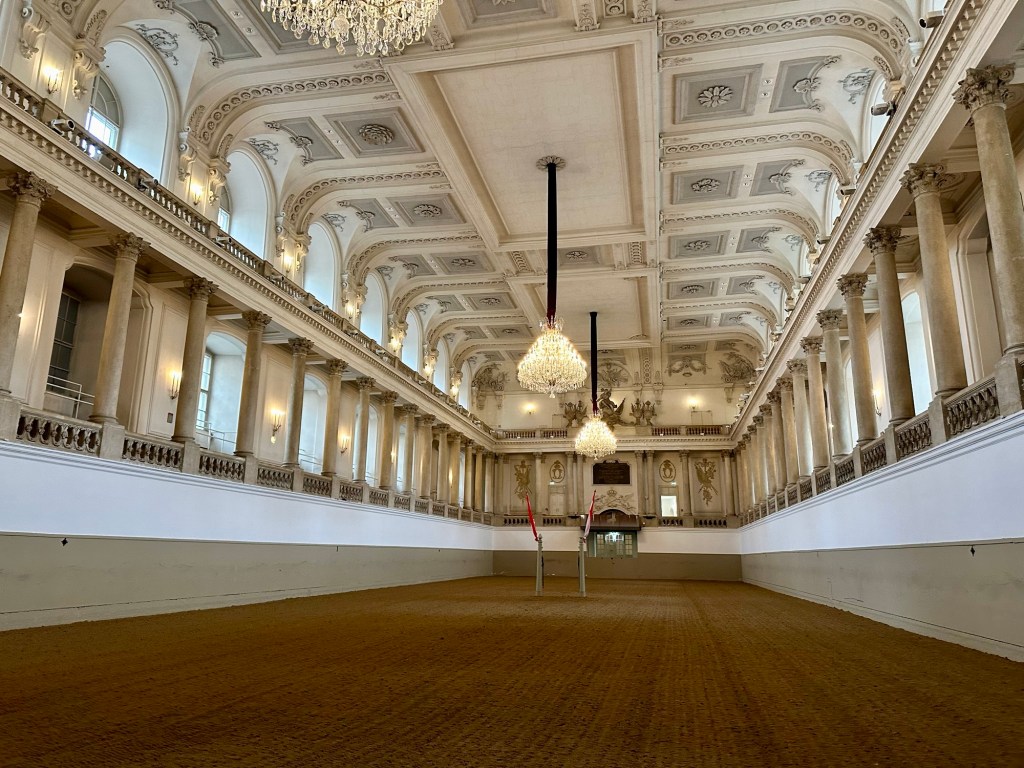
The school only had an outdoor arena until Charles VI built one between 1729-1736. He wanted to be acknowledged for building this so there is a huge painting of him inside the arena. The riders take their hats off as they get to center ring as a thank you to him to this day.
The Riding School has 111 horses. Not all are currently trained. They are leaving tonight to take 29 horses to London to begin a traveling show.
Rider training takes 8-12 years. To qualify you must be between 16-24 years of age, be no taller than 5’7” with long legs, speak German, be eligible to work in Austria, have basic riding skills and not be too heavy weight wise. Women weren’t allowed to apply until 2008 when the government ruled to allow both women as well as non-Austrians. If a rider is accepted they start as an apprentice which is basically doing stable work for the first year. After that they start as a proper student where they ride different horses over the next three years. They ride for about an hour a day while also working in the stables.
The next step is an assistant rider where they are assigned their own horse to train. Only mares perform and begin training at around 5 years with their assigned rider. Eventually riders are promoted to oversee 5-9 horses and new riders. Riders stay at the school until they retire at age 60.
Each rider gets two saddles that are custom made for them. A practice saddle and a performance saddle. Each horse has two bridles, a practice one and a more ornate one for performances.
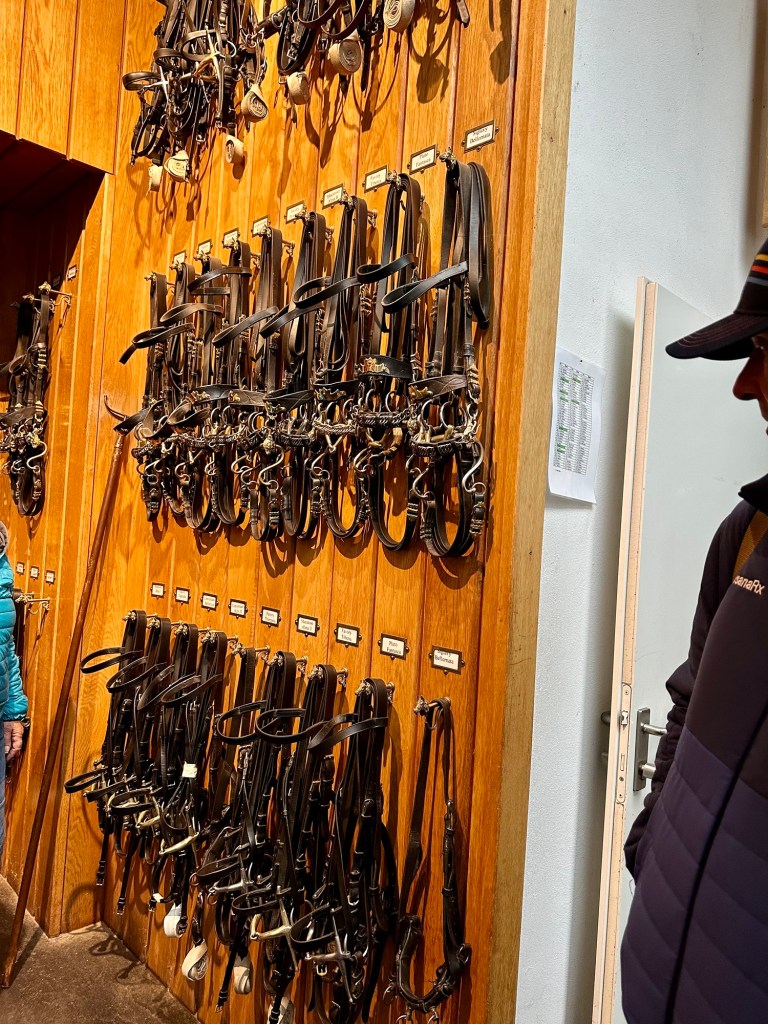
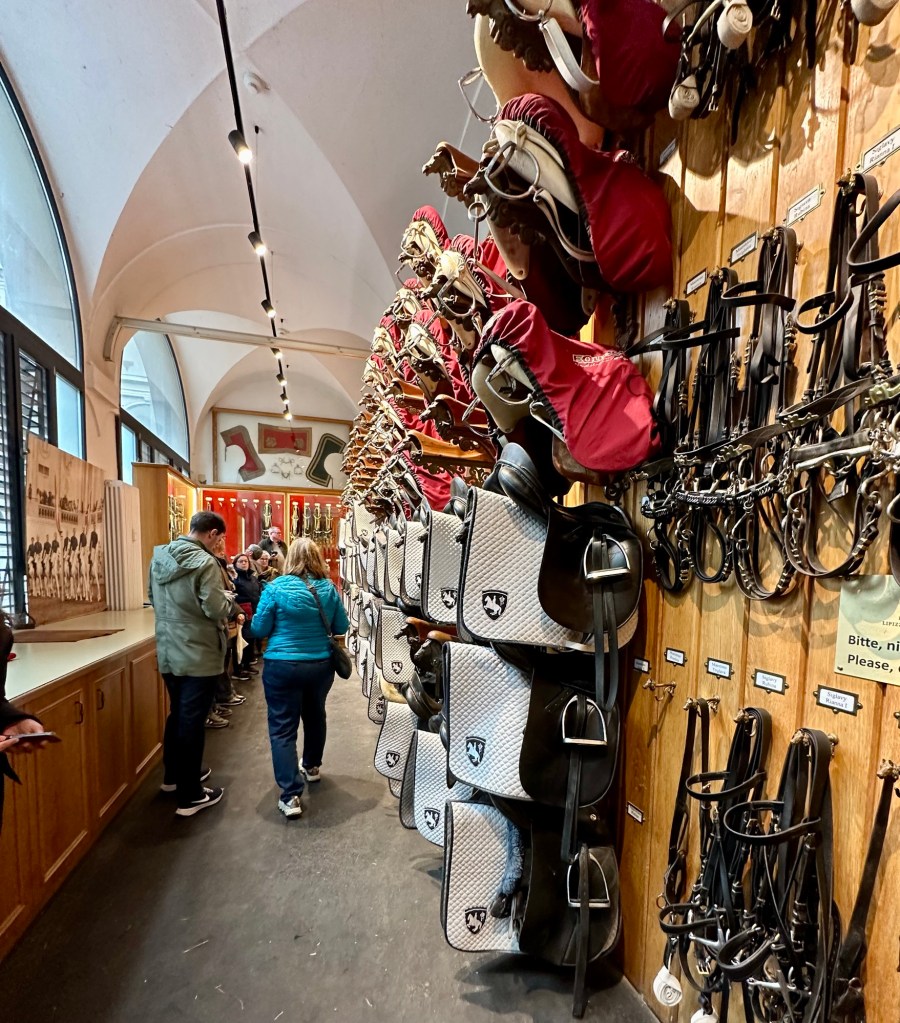
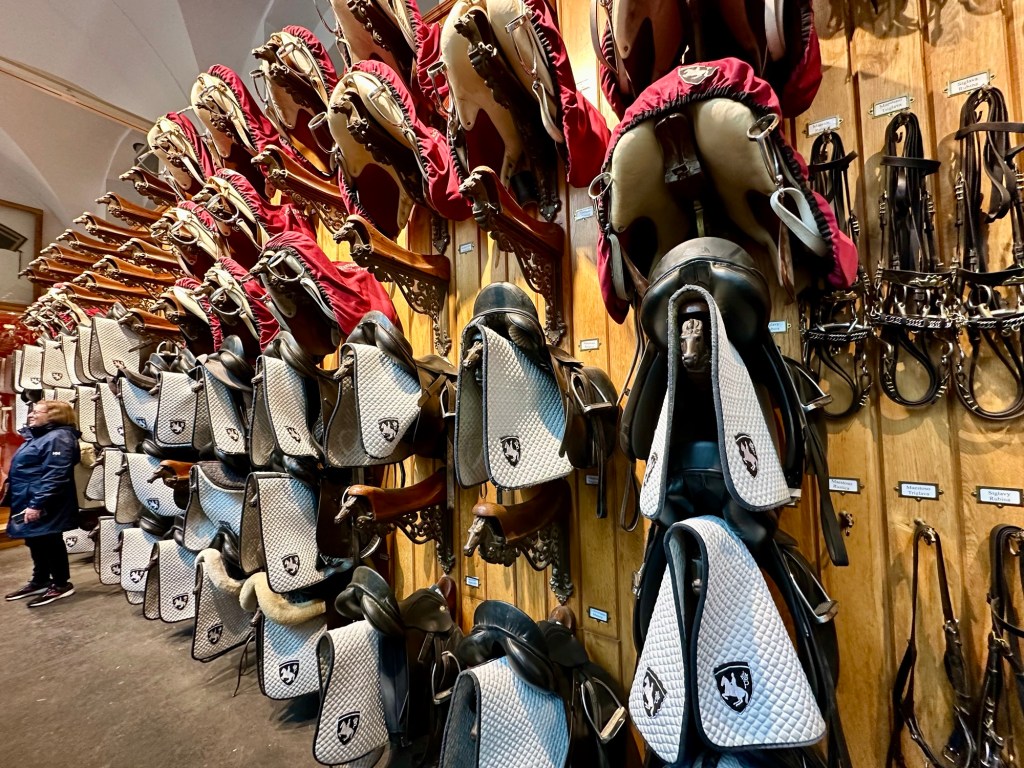
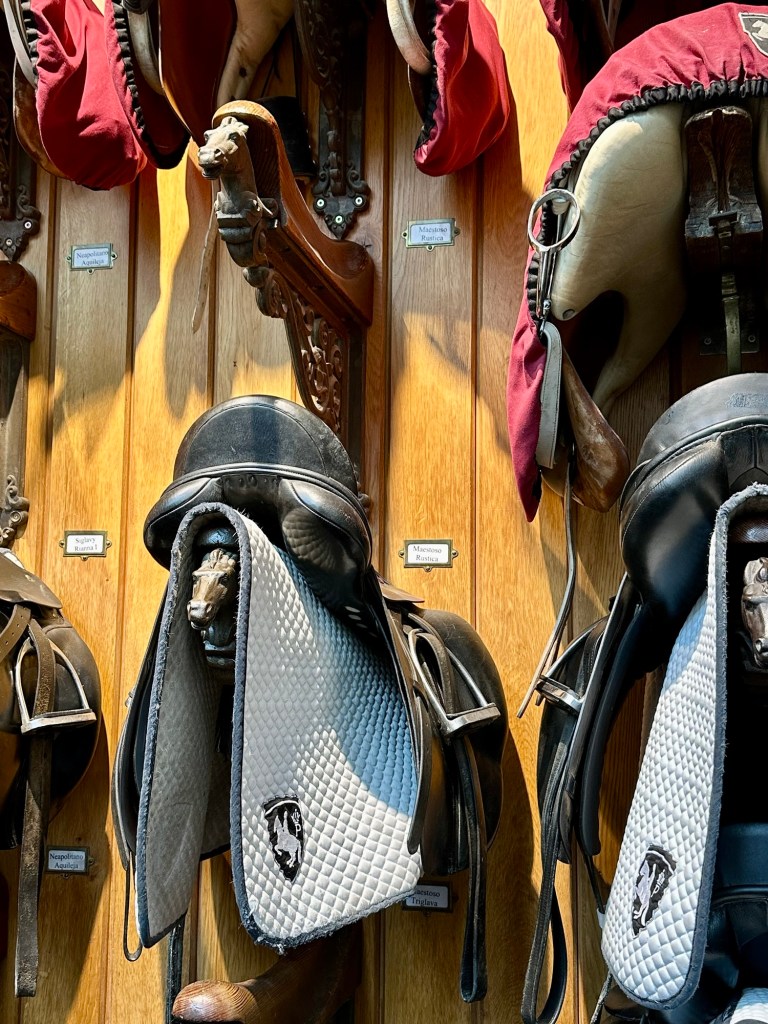
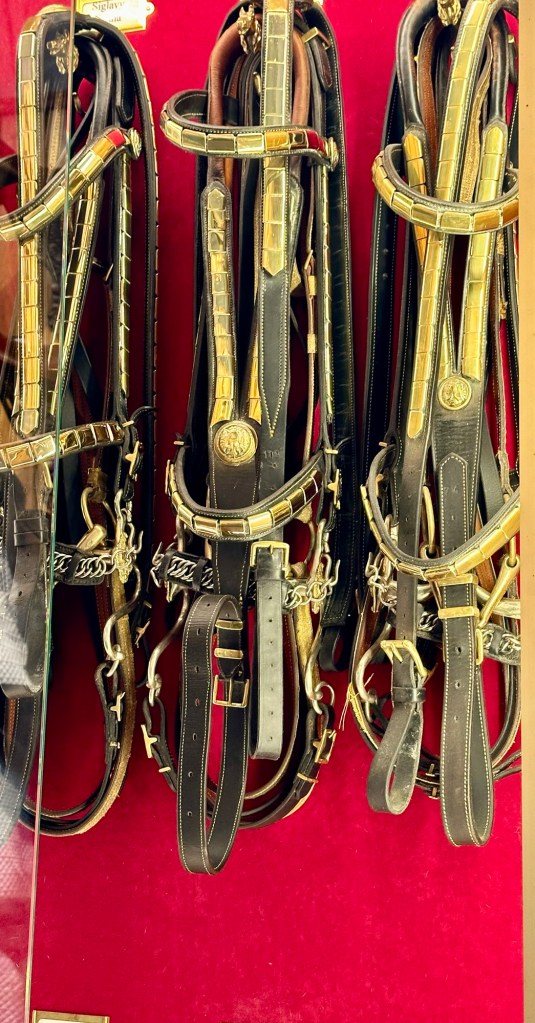
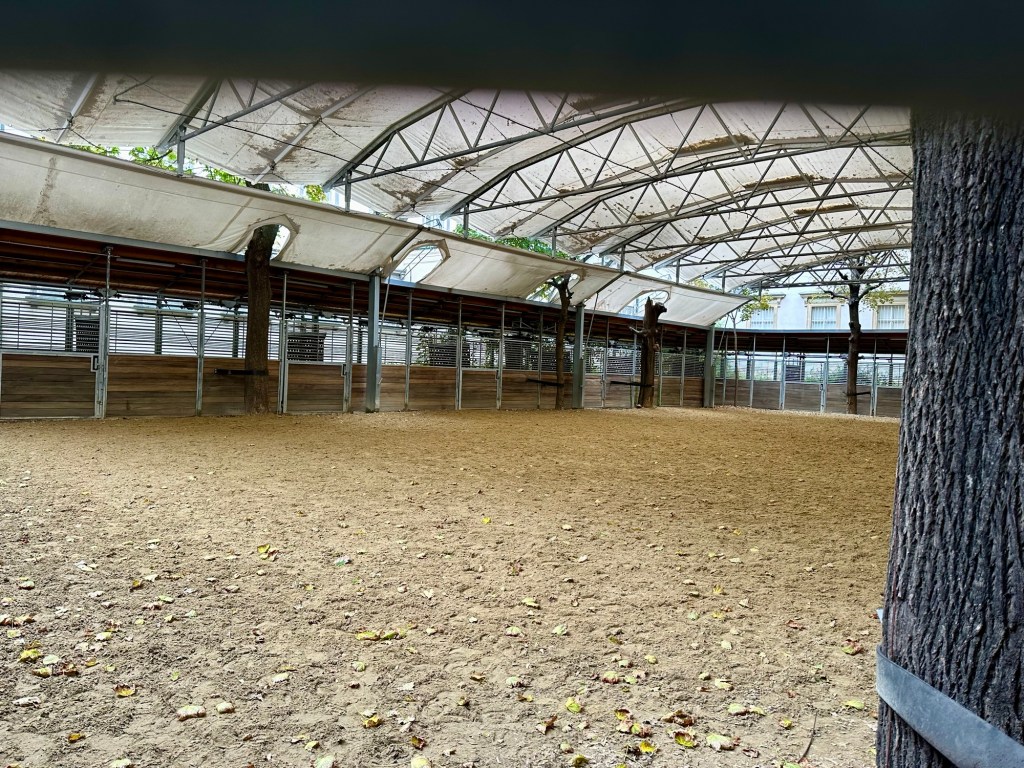
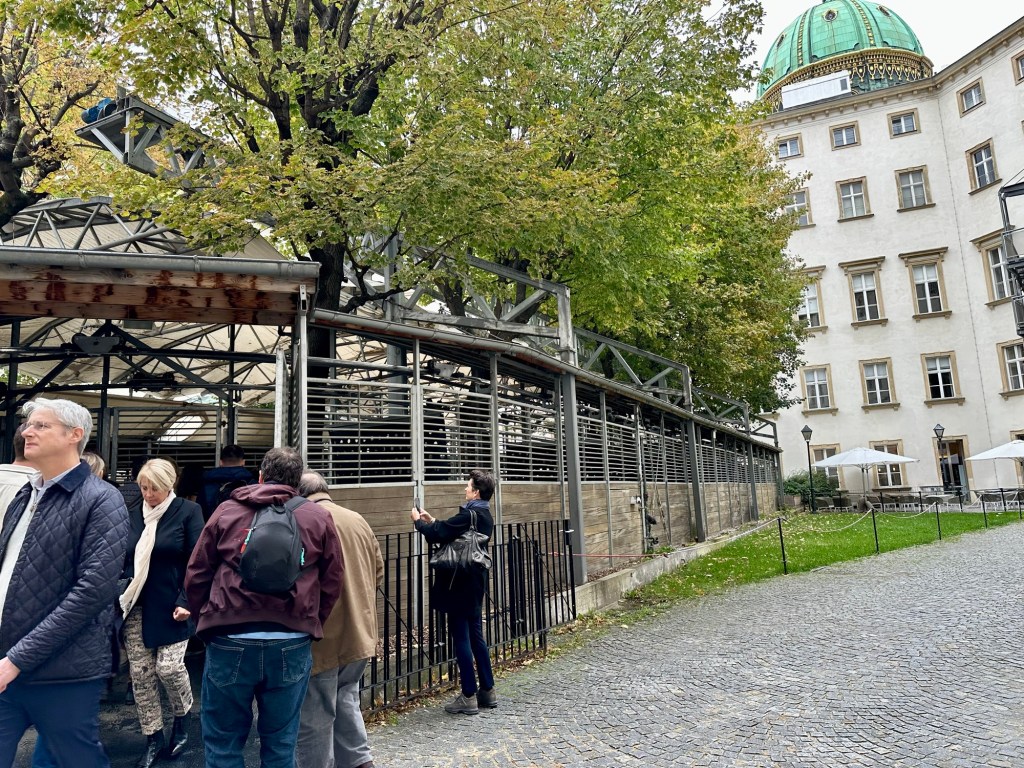
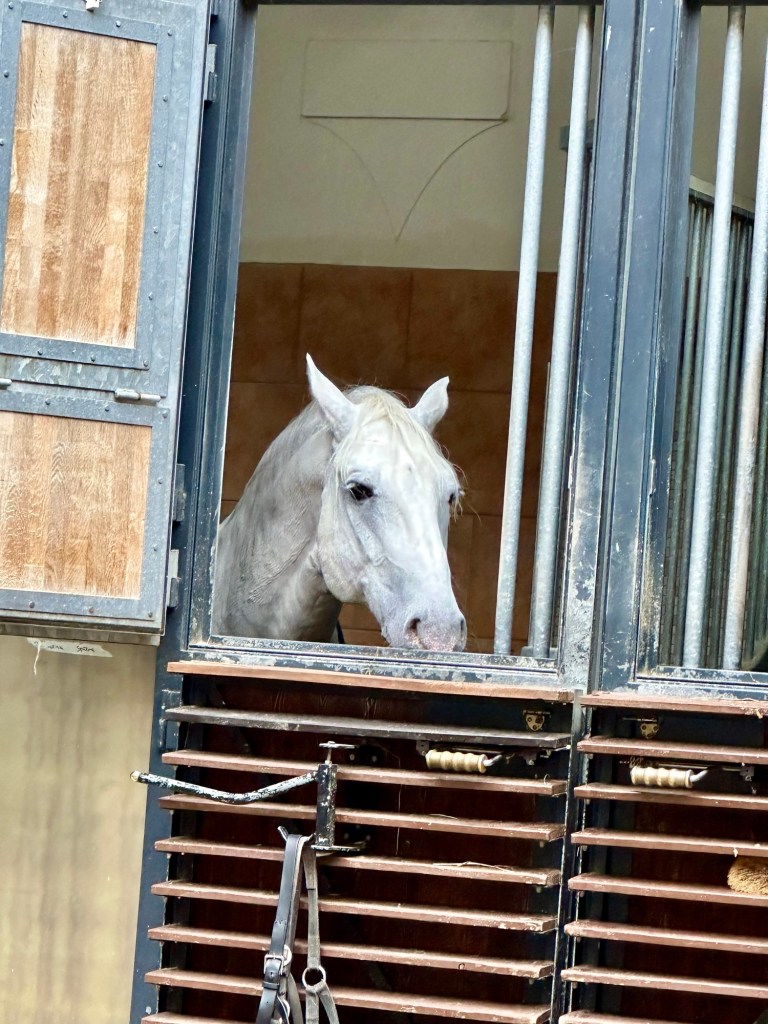
Pictures were not allowed in the inside stable but could be taken outside. Horses are named based on the blood line as well as with the mother and father’s name. Each stall had the horses specific food recipe on the doors. Some horses have dust allergies so the hay must be washed before it’s put in their stalls, others get shavings rather than hay. And then some are kept in outside stalls because of their dust allergies.

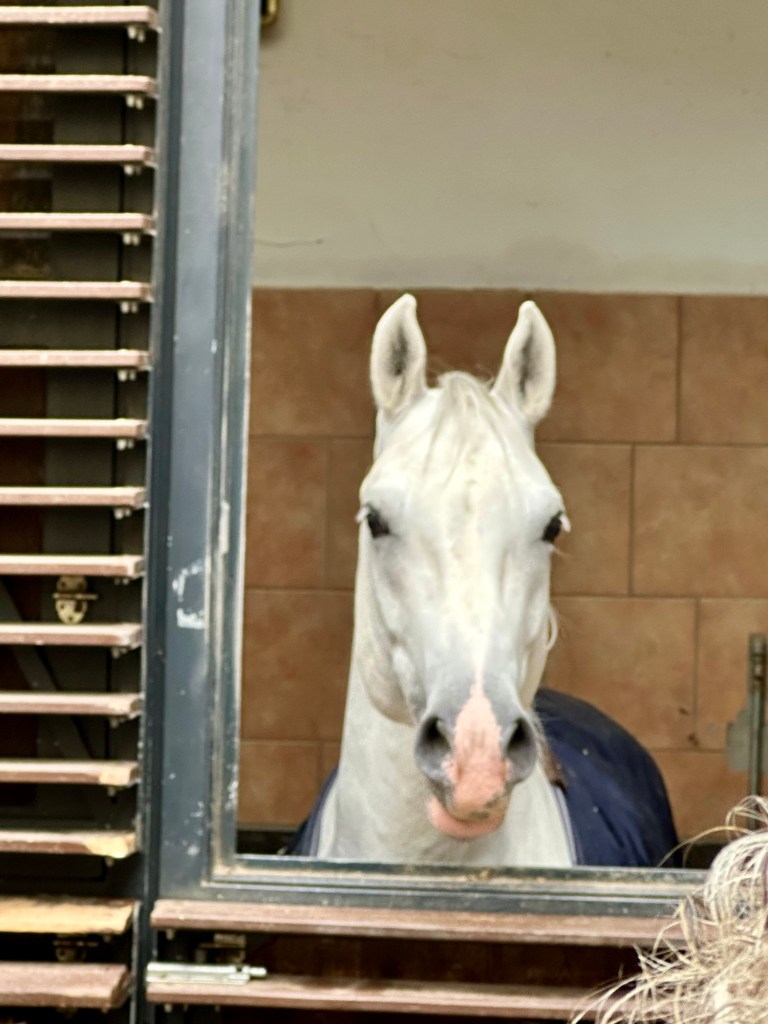
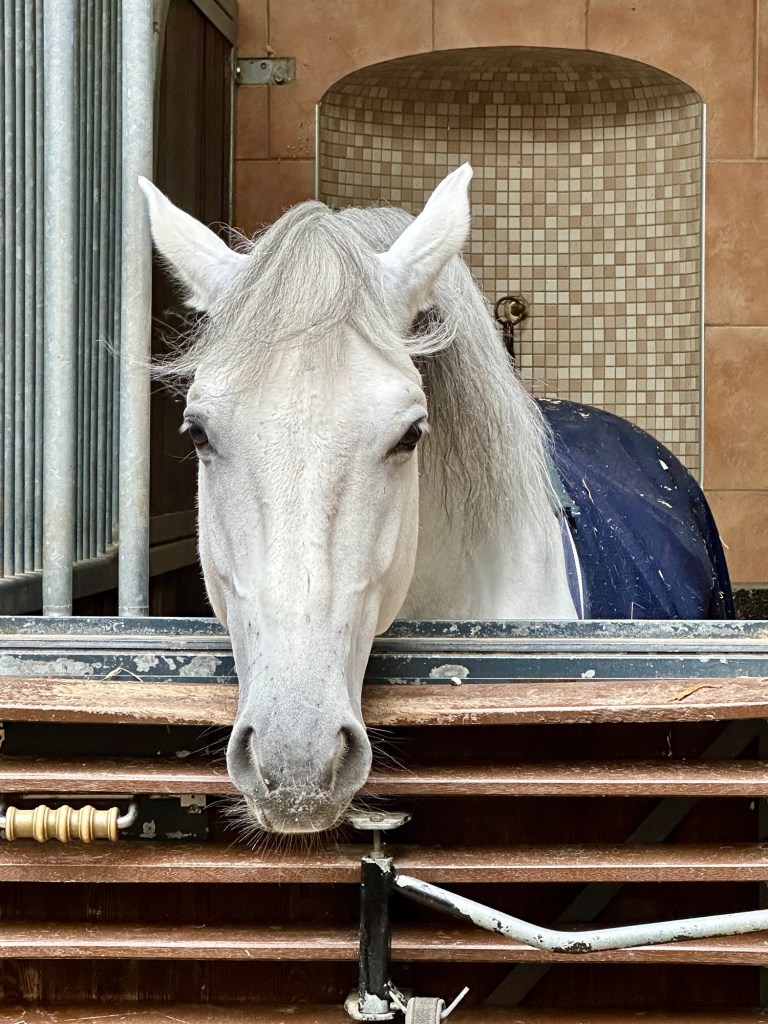

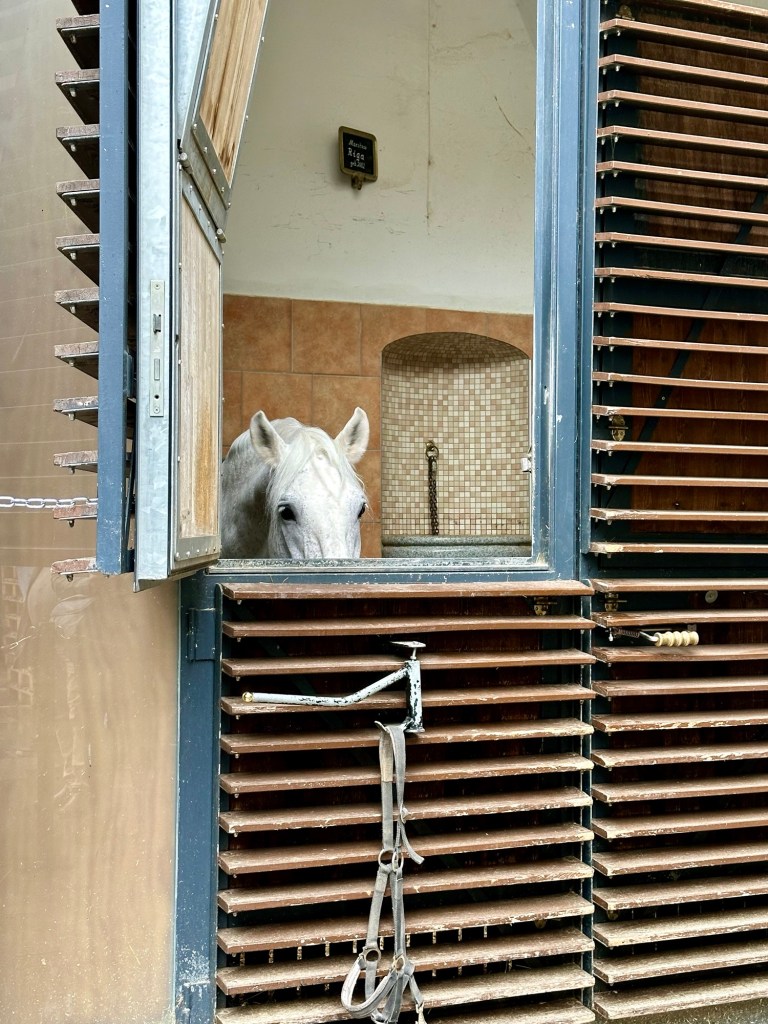
We also weren’t allowed to pet them. Apparently years ago they allowed people to pet them but someone came with a communicable disease and many horses died as a result of being infected by that guest. Was soooo difficult not to pet them or give them treats but still such a fun day to get to see them up close.
Someday I will be back for an actual performance but in the meantime I’m planning a trip to Chicago to see them next summer.
 The Bakers Grand European Vacation